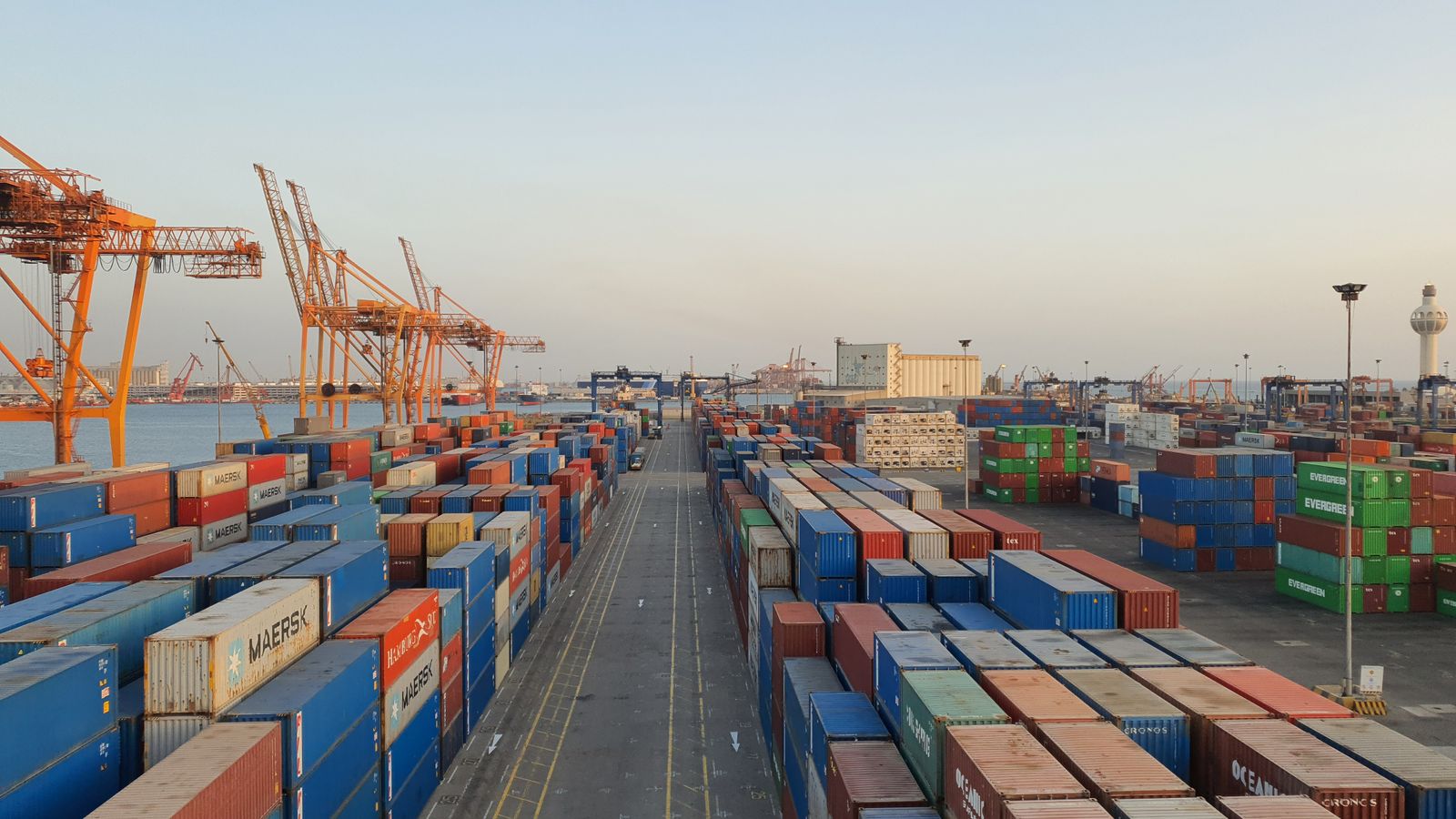
Landed cost is the total cost incurred to deliver one unit of inventory to its final destination, expressed as a per-unit dollar amount. It includes the purchase price plus every cost between the supplier and the fulfillment center: freight, duties, tariffs, customs brokerage, insurance, and inbound handling.
It does not include marketplace fees, fulfillment fees to the end customer, or marketing costs. Those happen on the sell side and belong in contribution margin, not landed cost.
Landed cost per unit = Supplier price + Inbound freight per unit (ocean, air, or domestic) + Import duties per unit + Tariffs per unit (Section 301, retaliatory, anti-dumping) + Customs brokerage allocation per unit + Insurance allocation per unit + Inbound handling at fulfillment center
The supplier price is what's on the invoice. The landed cost is what the inventory actually costs you. In ecommerce, the gap between these two numbers is often 20 to 40 percent.
A widget at $4.20 wholesale might cost you $5.45 landed once freight, the Section 301 tariff, and Amazon FBA inbound shipping are allocated. Your accounting needs to record the $5.45 number, because that is what the inventory is worth on the balance sheet and what COGS should be when the unit sells.
A multi-marketplace seller orders 5,000 units of a kitchen gadget from a Vietnam supplier at $4.20 per unit. Ocean freight on the full container is $1,750, which works out to $0.35 per unit. The product carries a 7.5% Section 301 tariff on the supplier price, so $0.32 per unit. Customs brokerage and import documentation cost $500 total, or $0.10 per unit. The fulfillment center charges $0.18 per unit for inbound receiving. There's no insurance on this shipment.
Landed cost per unit = $4.20 + $0.35 + $0.32 + $0.10 + $0.18 = $5.15
The inventory asset on the balance sheet shows $5.15 per unit. When the unit sells, COGS posts $5.15, not $4.20. The 22% gap between supplier price and landed cost is the gross margin trap that catches sellers who only track invoice price.
Landed costs used to be relatively stable. Ocean freight rates moved over years, tariffs were rare, and the supplier price did most of the work. Section 301 tariffs landing in 2024 and 2025, ongoing freight volatility, and the shift to multiple fulfillment centers per business have all made landed cost a moving target.
The implication for accounting: landed cost per SKU has to be recalculated with every new lot of inventory received. Sellers who treat landed cost as a once-a-year update line item are now seeing margin compression they don't expect.
ConnectBooks calculates landed cost per lot automatically. When you receive a new shipment, the inbound costs (freight, tariffs, brokerage) are allocated across the units in that lot. The inventory ledger shows the actual landed cost per unit at the lot level, and FIFO COGS uses the right lot's cost when units sell. Across multi-location operations using ConnectStock, the landed cost follows the inventory between locations.
Running an e-commerce business comes with plenty of challenges, but ConnectBooks is here to make your life easier. With real-time insights, seamless integrations, and detailed tracking of your profitability and inventory, you can stay ahead of the game. Whether you’re selling on Amazon, Shopify, Walmart, TikTok or eBay, ConnectBooks helps you manage your finances with 100% accuracy and confidence, so you can focus on growing your business.
Ready to level up? Start making smarter, data-driven decisions every step of the way. Try ConnectBooks Free Today or Schedule a Demo